
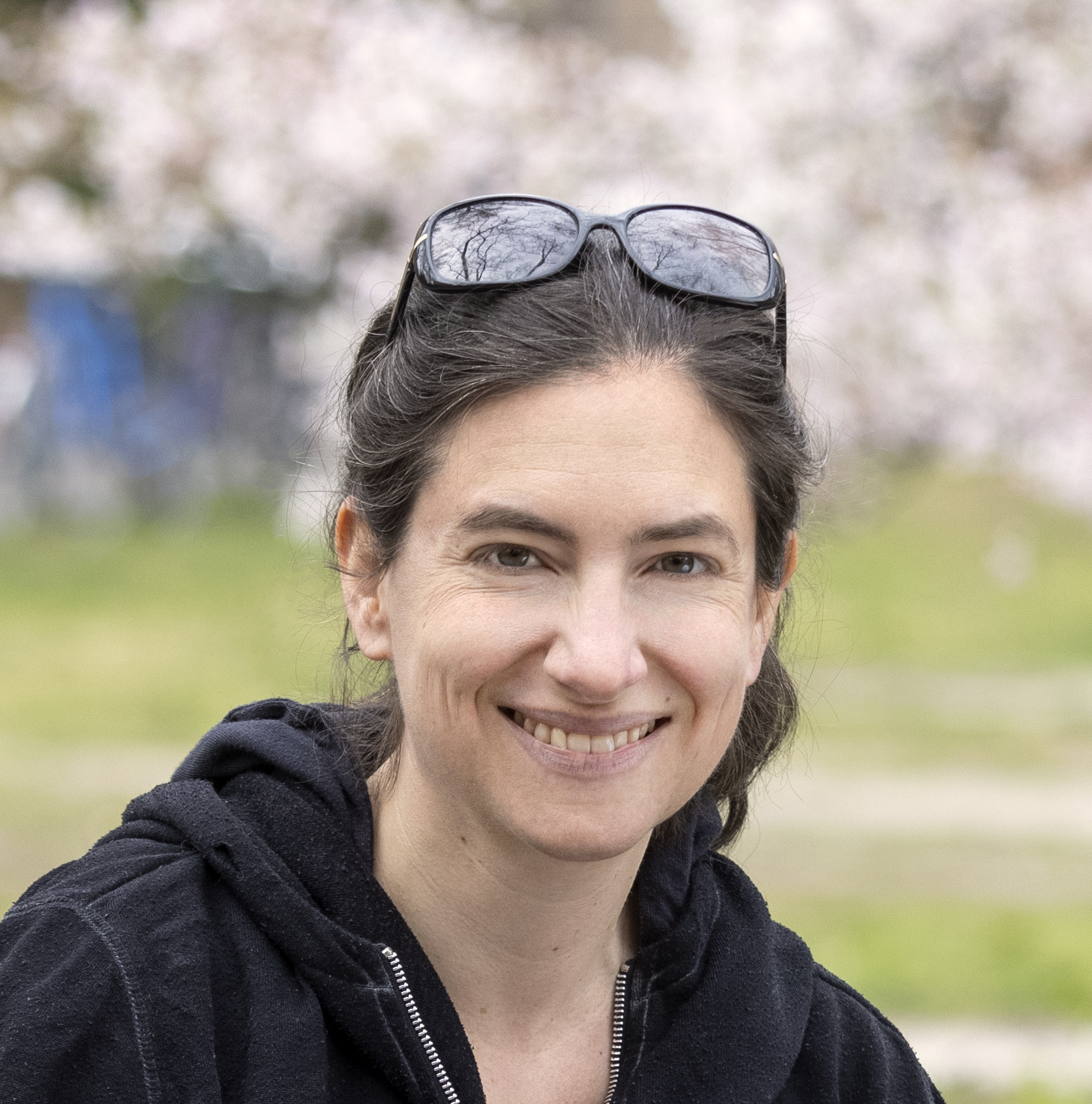
Dagmar Keinmüller
Affiliation: MDC-Berlin, Germany
Talk: The Aquatic Life Foundation Project: Quantifying Life at Scale in a Changing World
Abstract
The world’s oceans host plankton communities whose abundance and diversity underpin marine ecosystems and global carbon cycling. Automated imaging systems — from benchtop scanners to in-situ underwater cameras — already generate billions of images of plankton and marine particles worldwide, but in fragmented, instrument-specific formats with inconsistent metadata and lack of shared tools. The AqQua project sets out to change this by building a foundational model of plankton imaging data, alongside the data infrastructure and tools needed to train and apply it at scale toward accurate global mapping and monitoring of biodiversity, ecosystem fitness, and carbon flux. This talk presents AqQua’s approach and progress along fronts of particular interest to the AI- and computer vision community: First, large-scale data harmonization and AI-readiness, where we have aggregated more than 7 billion images provided by hundreds of collaborators around the globe — the largest and most diverse dataset of its kind — and developed a unified data format and toolchain that, for the first time, make large-scale cross-modality training practical. Second, self-supervised representation learning, where plankton imaging characteristics such as small size and comparatively low information content of individual images challenge state-of-the-art SSL paradigms.
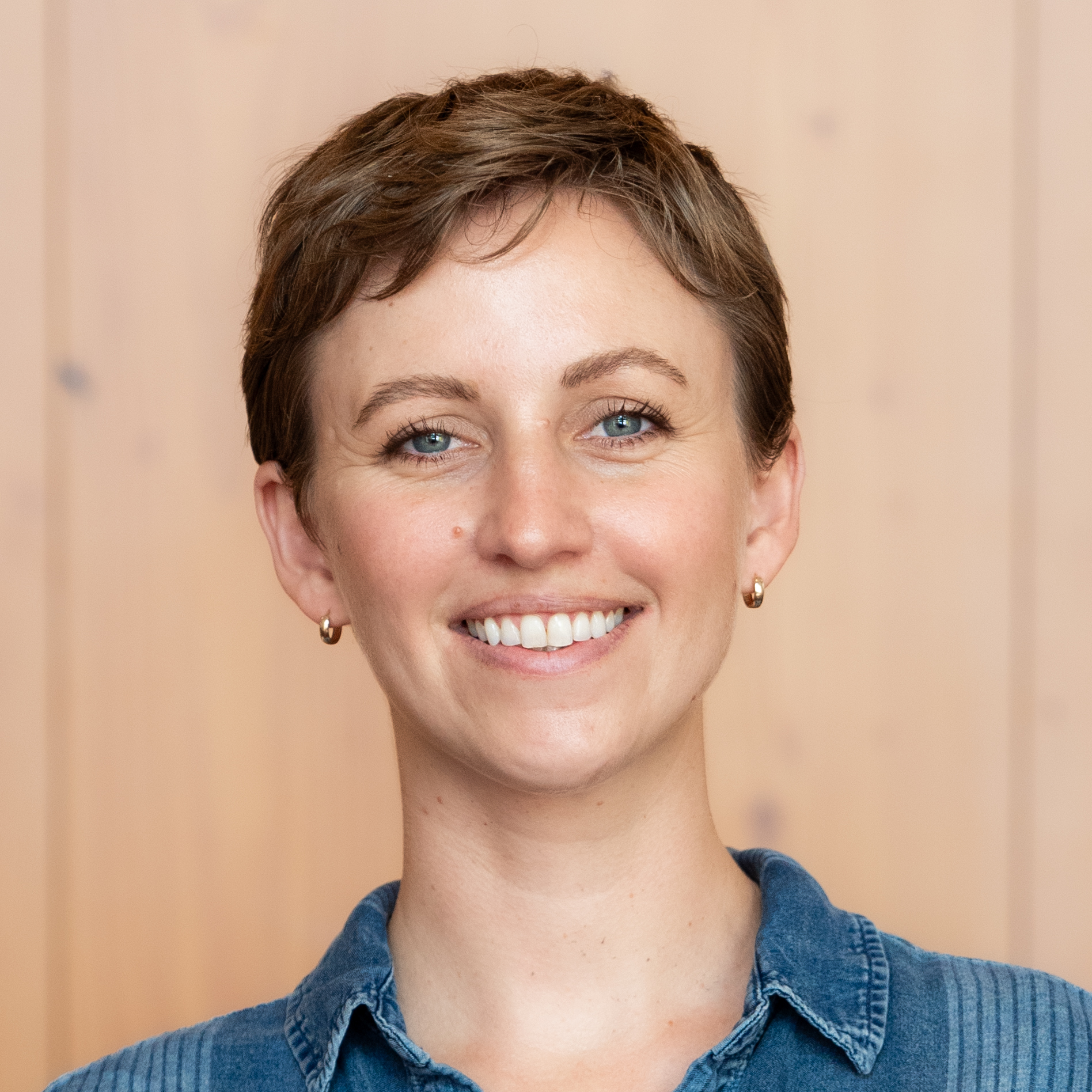
Sara Beery
Affiliation: MIT EECS, CA
Talk: Targeting Human Verification for Robust Deployment of AI in Ecology
Abstract
Machine learning models are increasingly deployed to process real-world data, and while model capabilities are improving and expanding, these models still make systematic errors that, if left unchecked, can result in biased and sometimes actively harmful dataset-scale analysis. Expert verification remains expensive and difficult to access at scale, particularly in scientific domains. We look at optimizing the use of expertise along several dimensions: first, we explore how humans can efficiently select from a pool of models, such as those on Hugging Face, to identify which model is best-performing for their data of interest. Second, we show human verification directly compliments active learning systems for rare category discovery in new deployments (domains), and propose a new discovery-focused stopping criterion inspired by ecological rarefaction that consistently outperforms existing systems. Third, we show that strategic review guided by scientific inference uncertainty rather than classification uncertainty enables robust population-level inference with 2-4× fewer expert labels. Our approaches robustly integrate ML into scientific workflows, where nearly all new data represents a distribution shift from what was seen before. We demonstrate direct applications in ecology that enable scientists to spend review effort on what matters for conservation action and scientific understanding: reliable species discovery, distribution modeling, and estimating covariate effects.
Olaya Álvarez-Tuñón
Affiliation: EIVA A/S & ITU, Denmark
Talk: Uncertainty-Aware monocular Visual Odometry: Robust perception in noisy underwater environments
Abstract
Can foundational models make downstream tasks such as Visual Odometry work in the underwater environment?
The key lies not just in the accuracy of these models, but in their reliability, which comes from estimating uncertainty so that we can trust the measurements we use. I present a monocular VO framework combining uncertainty-aware optical flow, a depth network with per-pixel uncertainty, uncertainty-guided point selection, and factor graph optimization. I discuss two complementary routes to robustness underwater: fine-tuning the foundation models, including the uncertainty head, on underwater imagery; and, alternatively, freezing the network and instead robustifying the optimization backend. Treating uncertainty this way effectively models each measurement as Gaussian noise, a treatment that Gaussian splatting makes explicit at the level of the scene representation itself. This raises the question of whether Gaussian Splatting offers an alternative promise for reliable underwater perception. I close with a recent benchmark of Gaussian splatting reconstruction quality underwater, examining whether scene-level reconstruction holds up under the same backscatter and attenuation effects that challenge VO.
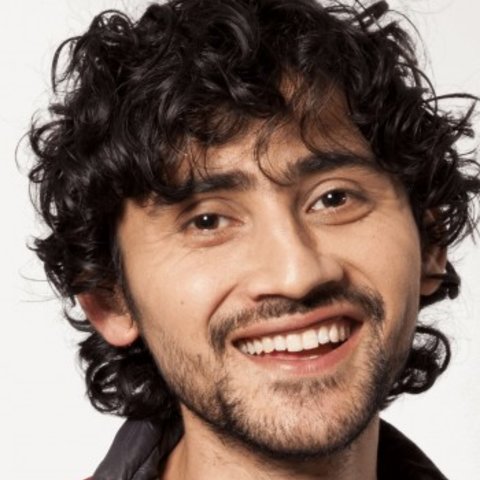
Manu Prakash
Affiliation: Stanford, CA
Talk: Wonders of a wandering world: Secret life of plankton
Abstract
This talk is as mysterious as plankton and there is only one way to uncover its secrets: join us at the workshop, find a chair, sit down, be quiet, and listen to Manu captivate you with his charismatic stories about the wondrous drifters of the oceans.